Born in 1960 or Later? The Truth About the 2027 Social Security Age Rumors
If you were born in 1960 or later, you may have seen headlines suggesting that Social Security’s retirement age is increasing again in 2027. That can sound alarming, particularly Social Security retirement age 2027 if you are approaching retirement and trying to decide when to claim your benefits.
But there is an important distinction between an existing retirement-age rule reaching its next stage and a brand-new increase being introduced.
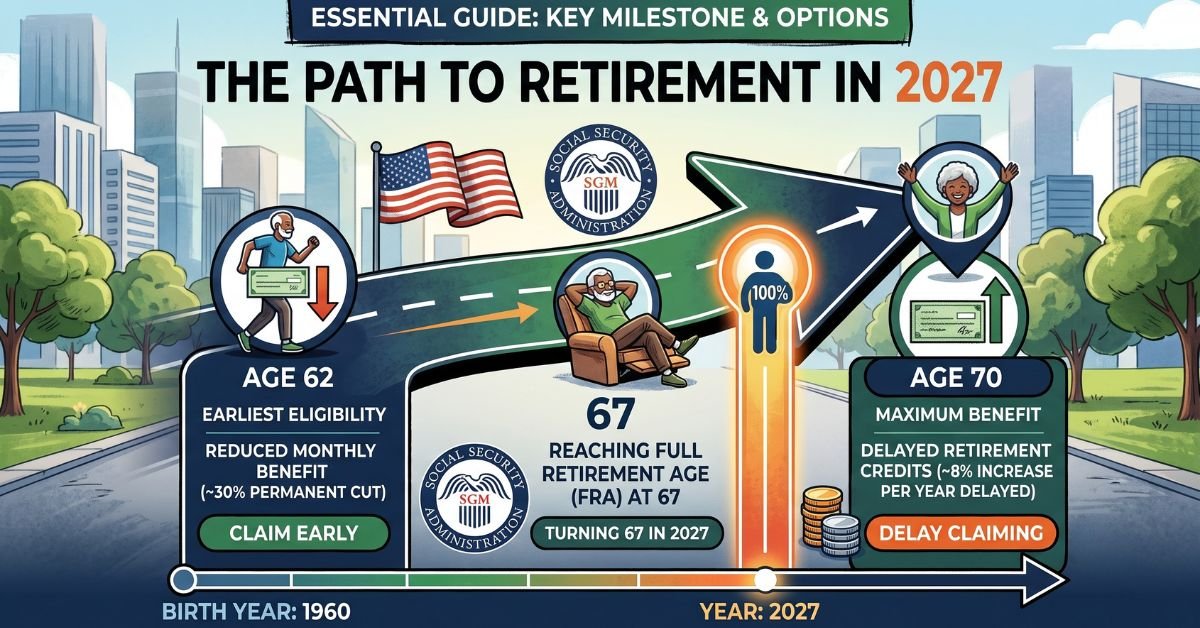
Under current Social Security rules, people born in 1960 or later have a Full Retirement Age 67. The Social Security Administration (SSA) also confirms that people can generally begin retirement benefits as early as age 62, although claiming before full retirement age results in a permanently reduced monthly benefit.
So, is the retirement age increasing in 2027?
Not in the way many viral headlines suggest.
The 2027 date is important because it is when people born in 1960 reach the full-retirement-age milestone of 67. It does not mean Congress has automatically raised the full retirement age beyond 67 starting in 2027.
For readers of Innovativeblogtech, the real question is not simply whether the retirement age is changing. It is how the existing rules could affect your Social Security claiming strategy, monthly benefit and retirement timeline.
Is the Social Security Retirement Age Increasing in 2027?
The short answer is no under current law.
The confusion comes from the fact that Social Security’s full retirement age has been gradually increasing over several decades. It was historically 65, then gradually moved upward for later birth years. The current schedule reaches age 67 for people born in 1960 and later.
That means the phrase Social Security retirement age increasing in 2027 needs context.
For someone born in 1960, reaching age 67 occurs in 2027. The rule isn’t suddenly changing when that person turns 67. Instead, that person is reaching the full retirement age already established under federal law.
The SSA’s current statistical reference lists a full retirement age of 67 for people born in 1960 or later and identifies 2027 and later as the years in which those individuals reach that age.
Why Is 2027 Getting So Much Attention?
The date matters because people born in 1960 turn 67 during 2027.
That creates a natural news hook, but it can easily be misunderstood as a new policy announcement.
Think of it this way:
- Born in 1958 → Full Retirement Age: 66 years and 8 months
- Born in 1959 → Full Retirement Age: 66 years and 10 months
- Born in 1960 or later → Full Retirement Age: 67
The increase was designed years ago and is already part of the existing Social Security schedule.
What Does Full Retirement Age 67 Actually Mean?
Full Retirement Age 67 means you can receive your full scheduled retirement benefit at that age, assuming you otherwise qualify.
It does not mean you have to stop working at 67.
It also does not mean you cannot claim Social Security before 67.
In fact, eligible workers can generally start retirement benefits at age 62. The trade-off is that starting earlier means receiving a lower monthly benefit than you would receive at full retirement age.
For people born in 1960 or later, the SSA’s current calculation shows that claiming at 62 results in 70% of the full retirement benefit for the worker. Waiting until 67 provides 100% of the full retirement benefit.
That difference can become significant over many years of retirement.
Social Security Changes for People Born in 1960
The most important Social Security changes born 1960 readers should understand involve the age at which they receive an unreduced retirement benefit.
If you were born in 1960 or later:
- Your full retirement age is 67.
- You can generally begin retirement benefits at 62.
- Starting before 67 reduces your monthly benefit.
- Waiting beyond full retirement age can increase your benefit.
- Delayed retirement credits can continue increasing your benefit until age 70.
This makes birth year particularly important when planning retirement.
Someone born in 1959, for example, has a different full retirement age from someone born in 1960. That difference may appear small, but it can affect the timing of unreduced benefits.
Social Security Administration FRA Chart
The Social Security Administration FRA chart is one of the simplest ways to determine your full retirement age.
| Birth year | Full Retirement Age |
|---|---|
| 1943–1954 | 66 |
| 1955 | 66 + 2 months |
| 1956 | 66 + 4 months |
| 1957 | 66 + 6 months |
| 1958 | 66 + 8 months |
| 1959 | 66 + 10 months |
| 1960 or later | 67 |
The SSA notes that someone born on January 1 should generally use the previous year when determining full retirement age.
Social Security Early Retirement Penalty at Age 62
One of the biggest misunderstandings surrounding the 2027 rumors is the idea that Americans must wait until 67 before they can receive Social Security.
That is incorrect.
The Social Security early retirement penalty age 62 is important because 62 remains the earliest age at which most eligible workers can begin retirement benefits.
However, claiming at 62 instead of waiting until 67 means accepting a lower monthly payment.
For someone born in 1960 or later, the SSA shows a worker claiming at exactly age 62 receives 70% of the full retirement benefit. At 67, the worker receives 100%.
That reduction is not the same thing as a government fine. It is an actuarial reduction associated with starting benefits earlier.
What Happens If You Wait Until 70?
Waiting can work in the opposite direction.
For people born in 1960 or later, the SSA says delaying retirement benefits beyond full retirement age increases the monthly benefit. If benefits begin at age 70, the amount reaches 124% of the full retirement benefit.
After age 70, there is no additional increase for continuing to delay retirement benefits.
This creates three broad claiming points:
Age 62: Earlier access, but substantially reduced monthly benefits.
Age 67: Full retirement age and 100% of the scheduled retirement benefit.
Age 70: Maximum delayed-retirement benefit under the standard retirement framework.
Is the Retirement Age Increasing in 2027 or Not?
Here is where the rumor becomes more complicated.
There are proposals and policy options that would increase the normal retirement age beyond 67. The SSA’s Office of the Chief Actuary publishes analyses of possible Social Security reforms, including options that would gradually increase the normal retirement age to 68.
But these proposals should not be confused with current law.
So when someone searches is the retirement age increasing in 2027 or Not? the answer should distinguish between:
Current law: Full retirement age is 67 for people born in 1960 and later.
Policy proposals: Some proposals would raise the retirement age in the future.
2027: People born in 1960 reach age 67, which is their scheduled full retirement age.
That distinction is crucial for anyone making a retirement decision based on a social-media headline.
What Social Security Changes in 2027 Could Actually Matter?
The retirement-age rumor should not distract people from the broader Social Security program.
Social Security rules can involve annual changes to factors such as benefit amounts, taxable earnings and other program thresholds. The SSA publishes official updates and projections separately from the full retirement-age schedule.
For example, the SSA’s 2026 Trustees-related projections include an estimated 2027 COLA, but that is a projection rather than a guaranteed future payment adjustment.
This is why retirement planning should rely on official SSA information rather than social-media posts claiming that everyone must suddenly work until 67 or beyond.
For readers following retirement and personal-finance developments through Innovativeblogtech, separating confirmed rules from proposed reforms can prevent expensive planning mistakes.
Should You Claim Social Security at 62, 67 or 70?
There is no single answer that works for everyone.
The right claiming age depends on factors such as:
- Your health and expected longevity
- Whether you continue working
- Your household income
- Other retirement savings
- Your spouse’s benefits
- Whether you need income immediately
- Tax considerations
- Survivor-benefit considerations
Someone who needs income immediately may have a different strategy from someone who has substantial retirement savings and wants to maximize their monthly Social Security payment.
The key is to understand the permanent trade-off before filing.
A Simple Example
Imagine a worker’s full retirement benefit at age 67 is $2,000 per month.
If that worker claims at 62 and receives 70% of the full retirement benefit, the monthly amount would be approximately $1,400 under this simplified example.
Waiting until 67 would mean approximately $2,000 per month.
Waiting until 70, using the SSA’s 124% figure for someone born in 1960 or later, would produce approximately $2,480 per month.
These figures are only an illustration. Actual benefits depend on an individual’s earnings record and Social Security calculation.
The lesson is more important than the example: the age you choose can have a lasting effect on your monthly retirement income.
What People Born in 1960 Should Do Now
If you were born in 1960, 2027 is an important retirement-planning year because you reach your scheduled full retirement age of 67.
But don’t make a claiming decision simply because you saw a headline saying the retirement age is increasing.
Instead:
1. Check Your Actual Social Security Record
Review your earnings history and estimated retirement benefit through your official Social Security account.
2. Compare Multiple Claiming Ages
Look at the estimated benefit at 62, full retirement age and later claiming ages.
3. Consider Your Other Retirement Income
Social Security may be only one part of your retirement income. Include pensions, 401(k)s, IRAs, investments and other reliable income sources.
4. Think About Longevity
Claiming earlier provides money sooner, while delaying can provide a larger monthly benefit later. Your personal circumstances matter.
5. Don’t Confuse Proposals With Law
A proposal to change Social Security is not the same as an enacted change.
That distinction is especially important when reading viral posts about a supposed 2027 retirement-age increase.
The Bottom Line on the 2027 Social Security Age Rumor
The biggest takeaway is straightforward:
There is not currently a new law that suddenly raises Social Security’s full retirement age above 67 in 2027.
Instead, 2027 is significant because people born in 1960 reach the already scheduled full retirement age of 67.
The Social Security retirement age 2027 discussion is therefore less about a surprise new retirement rule and more about understanding an existing birth-year schedule.
The Social Security retirement age 2027 rule also does not eliminate the option of claiming at 62. Instead, claiming earlier generally means receiving a reduced monthly benefit.
For people born in 1960 or later, the Social Security retirement age 2027 milestone should be viewed as a planning checkpoint rather than a sudden deadline.
And while proposals to change Social Security’s retirement age exist, they should not be treated as current law unless Congress actually enacts them.
For anyone approaching retirement, the smartest move is to check the latest information directly from the SSA, compare your estimated benefits at different claiming ages and consider your broader retirement income strategy before making a decision.
For Innovativeblogtech, the key lesson from this developing retirement story is simple: don’t let a dramatic headline replace the actual rule. A few minutes spent checking your birth-year FRA and estimated benefit could be far more valuable than reacting to an unverified 2027 rumor.
Frequently Asked Questions
1. Is Social Security retirement age increasing in 2027?
No new increase beyond the existing schedule is currently in effect. People born in 1960 or later have a full retirement age of 67. The significance of 2027 is that people born in 1960 reach age 67 that year.
2. Can I still claim Social Security at age 62?
Yes. The earliest age for claiming retirement benefits remains 62. However, claiming before your full retirement age generally results in a permanently reduced monthly benefit.
3. What is the full retirement age for someone born in 1960?
For someone born in 1960, the full retirement age is 67. The same full retirement age applies to people born after 1960 under the current schedule.
4. Will Social Security’s retirement age eventually rise above 67?
There are proposals for increasing the normal retirement age beyond 67, including proposals analyzed by the SSA’s Office of the Chief Actuary. However, a proposal or policy option is not the same as current law.
5. Is it better to claim Social Security at 62 or 67?
It depends on your personal circumstances. Claiming at 62 can provide income earlier but results in a lower monthly benefit. Waiting until full retirement age provides the unreduced scheduled benefit, while delaying beyond full retirement age can increase the monthly payment until age 70.