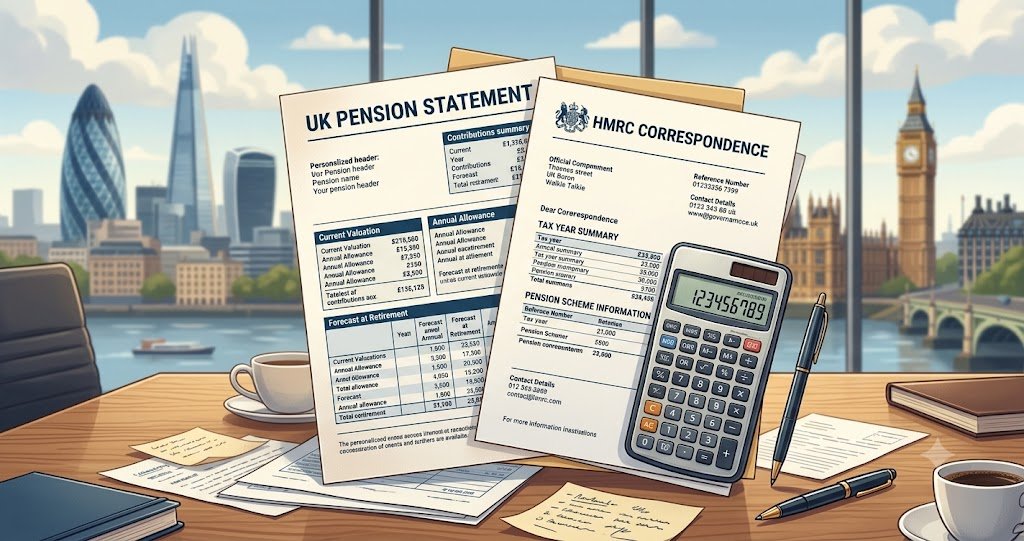
HM Revenue & Customs is contacting around 1 million people who may be entitled to a new Low Earner’s Pension Payment after missing out on pension tax relief because of the way their workplace pension contributions were processed.
The payment addresses a long-running difference between pension schemes using a Net Pay Arrangement and those using Relief at Source. Lower-paid workers in some net pay schemes could make pension contributions without receiving the tax relief available to people using a different type of scheme.
HMRC says eligible people do not need to apply in advance. The tax authority will identify potentially eligible individuals and contact them directly. The measure covers relevant pension contributions from the 2024–25 tax year onwards.
For people searching for an HMRC low earners pension refund, it is important to understand that this is not simply a conventional pension refund. It is a payment designed to address tax relief that some low earners did not receive.
Also Read: US Stock Market Forecast: Dow, Nasdaq & S&P 500 This Week
Why is HMRC making the payment?
The issue comes from the way pension tax relief is administered.
Under a Net Pay Arrangement, an employee’s pension contribution is taken from their earnings before income tax is calculated. For a taxpayer, that normally means the contribution receives tax relief automatically.
The problem arises for people whose earnings are around or below the Personal Allowance. If they do not pay income tax, there may be no tax for the pension contribution to reduce.
A worker earning close to the Personal Allowance could therefore contribute to a pension but receive a different tax outcome from another worker making the same contribution through a Relief at Source scheme.
HMRC’s new payment is intended to address that difference. The government introduced legislation to provide relief to affected individuals from the 2024–25 tax year onwards.
Who could qualify for the HMRC low earners pension payment?
HMRC says an individual may be eligible where they:
- earned close to the Personal Allowance in a tax year;
- contributed to a workplace pension operating through a Net Pay Arrangement; and
- did not receive income tax relief on those pension contributions.
HMRC will assess eligibility separately for each relevant tax year.
The Personal Allowance is typically £12,570, although the precise calculation depends on an individual’s circumstances and the tax year involved. HMRC’s guidance says people may qualify for one or more years from 2024–25 onwards.
This means someone who was eligible for more than one tax year could potentially receive more than one payment.
How much could the payment be?
There is no single payment amount for everyone.
The amount depends on factors including earnings and the amount contributed to the workplace pension during the relevant tax year.
Earlier government estimates put the average benefit at around £53 a year, while more recent reporting has indicated payments could be around £70 for some recipients. The actual amount can be higher or lower depending on individual contributions and circumstances.
For example, if an eligible worker contributed £300 during a tax year in circumstances where the full tax relief was missed, a payment equivalent to 20% of the gross contribution could be £60.
That should be treated as an illustration rather than a guarantee of what any individual will receive.
Is this really an HMRC low earners pension refund?
The term “refund” is likely to be used in online searches, but the official terminology is the Low Earner’s Pension Payment.
It is also important to understand that the payment is not necessarily returned to the individual’s pension fund.
The payment is made directly to the individual rather than being treated as an additional workplace pension contribution. HMRC is responsible for identifying eligible people and calculating the amount due.
Do employees need to contact HMRC?
No.
HMRC says eligible individuals do not need to contact the tax authority before receiving correspondence. The department will identify people using available information and contact those who may qualify.
Employees should wait for HMRC’s communication and then follow the instructions provided.
Employers also do not have to calculate historic payments, change payroll records or submit applications for their workers.
What should you do if you receive a letter?
Anyone receiving unexpected correspondence about an HMRC pension payment should take reasonable steps to verify it.
Pension-related payments are attractive targets for scammers because recipients may be expecting money.
HMRC has warned that it will not ask people to transfer money to receive their payment, provide passwords or disclose PIN numbers. People should use official HMRC channels rather than clicking suspicious links in unsolicited messages.
The Personal Tax Account can also be used when HMRC directs an eligible individual to complete the process.
What about people who do not earn anything?
The question “how much can a non earner pay into a pension?” is separate from the new HMRC payment.
Someone with little or no taxable income can still contribute to a pension under the normal pension rules, but the tax treatment is different from that of a taxpayer. The HMRC Low Earner’s Pension Payment specifically addresses certain workplace pension contributions where eligible low earners missed out on relief.
Therefore, people should not assume that every person with no income will automatically receive the new payment.
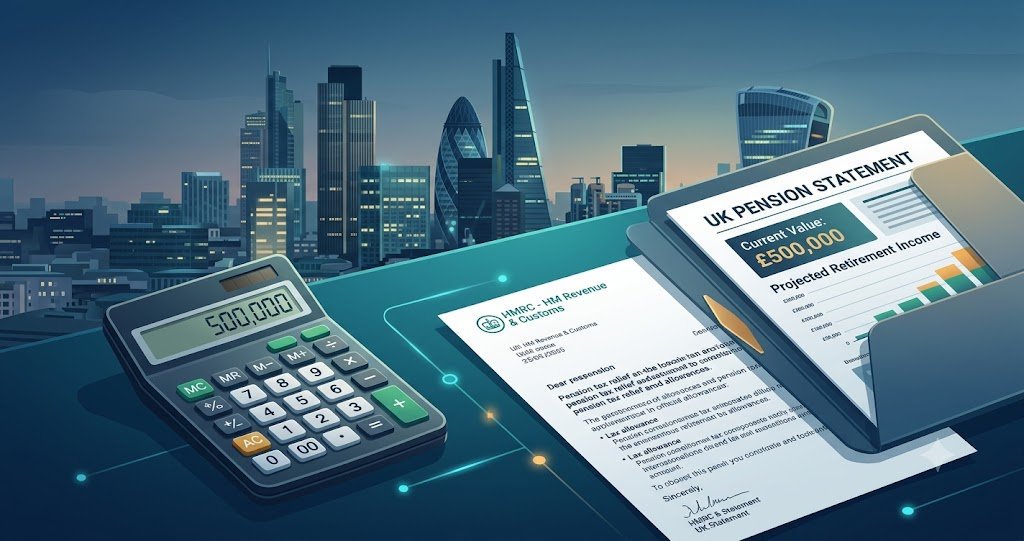
What about a £500,000 pension?
Another frequently searched question is “how much will a £500k pension pay UK?”
That cannot be answered with a single guaranteed figure.
The income generated by a £500,000 pension pot depends on the withdrawal method, investment performance, age, retirement timeframe, annuity rates, inflation, tax and how quickly the money is withdrawn.
A £500,000 pension pot is therefore not equivalent to a fixed annual salary. Someone using drawdown might choose a different withdrawal rate from someone purchasing an annuity.
The HMRC low-earner payment should also not be confused with retirement income from a pension pot. They are separate issues.
Why this matters for businesses and payroll teams
The change is particularly relevant to employers with large numbers of lower-paid workers.
HMRC has made clear that employers do not need to retrospectively alter payroll records or assess employees for the payment. However, payroll departments may receive questions from workers who receive HMRC correspondence.
Employers should be prepared to explain that the payment is being administered by HMRC rather than being a correction to an employee’s current payslip or pension deduction.
What readers should understand
The key point is that the HMRC low earners pension refund is better understood as a new payment intended to correct a pension tax-relief imbalance affecting certain low earners.
Not every low-paid worker will qualify. Eligibility depends on earnings, pension contributions, the type of pension arrangement and the relevant tax year.
People who believe they may qualify should not pay a third party to make a claim on their behalf simply because they see an advertisement for a “pension refund.” HMRC is responsible for identifying eligible individuals.
The safest approach is to wait for official communication and verify any correspondence through GOV.UK or an individual’s Personal Tax Account.
Also Read: Social Security Trust Fund: 2034 Depletion Date Explained
Conclusion
The new HMRC low-earner pension payment could provide useful financial support to people who missed pension tax relief because of the way their workplace pension was structured. Around one million people may be contacted, with eligibility assessed for relevant tax years from 2024–25 onwards.
The important distinction is that this is not a universal pension refund. It targets a specific tax-relief issue affecting eligible low earners in certain workplace pension arrangements.
Anyone receiving correspondence should verify it through official HMRC channels and avoid providing sensitive information to unsolicited callers, emails or websites.
FAQs
When will HMRC contact low earners about the pension payment?
HMRC announced that it would begin contacting around one million potentially eligible people during 2026.
Is the HMRC low earners pension payment automatic?
Eligibility is identified by HMRC, but individuals who receive an offer may need to follow the instructions and accept the payment.
How much is the low earner pension payment?
The amount varies according to pension contributions and individual circumstances. Government estimates have previously suggested an average around £53, while more recent reporting has indicated payments may be around £70 for some people.
Does the payment go into my pension?
No. The payment is made directly to the eligible individual rather than being treated as a normal contribution to their pension pot.
Do employers need to apply for the payment?
No. HMRC says employers do not need to assess eligibility, amend payroll records or apply on behalf of employees.