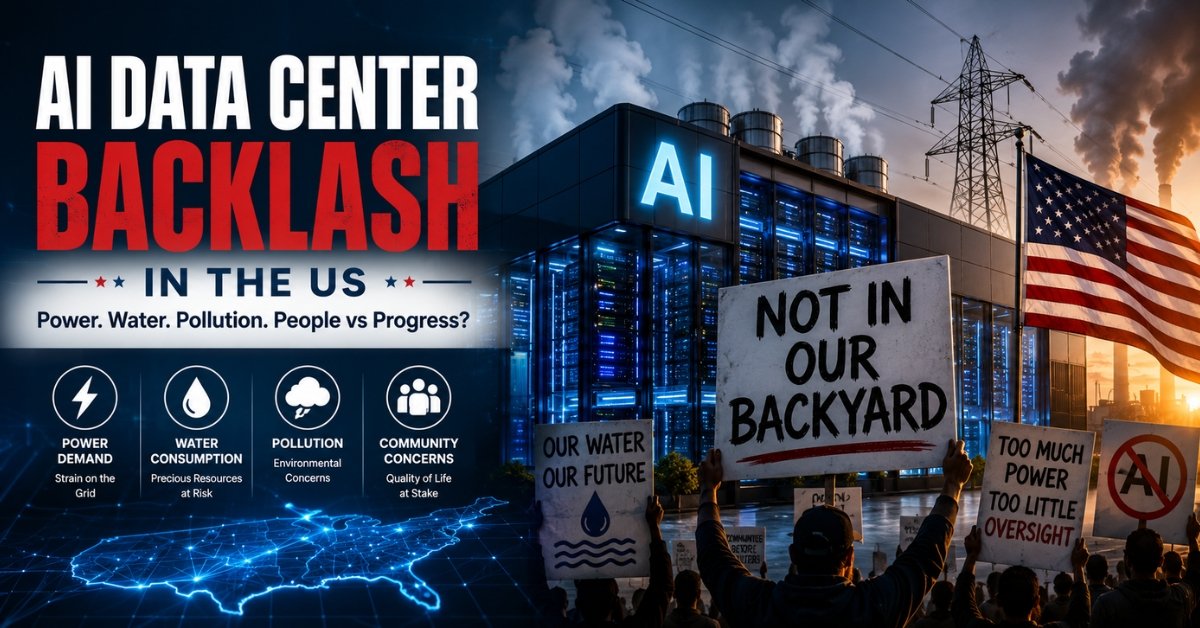
A silent revolution is humming across the American landscape, but everyday citizens are reaching for the emergency shutoff switch. Across Northern Virginia’s “Data Center Alley,” the arid corridors of Arizona, and quiet suburban townships in Georgia and Ohio, massive concrete facilities are multiplying at breakneck speed. Behind their barbed wire and windowless walls sit rows of power-hungry servers fueling the artificial intelligence race.
However, this rapid physical expansion has hit a fierce wall of local resistance. In response, Silicon Valley titans are opening their war chests to mount an aggressive public relations offensive. Facing intense scrutiny over natural resource depletion, grid strain, and opaque corporate negotiations, the tech industry is attempting to persuade regular homeowners that server campuses are vital national assets.
This comprehensive analysis breaks down the forces driving the national resistance, examines the industry’s counter-strategy, and uncovers why bridging the trust deficit requires a fundamental rewrite of modern technology relations.
The Boiling Point: Rising AI Data Center Backlash Across the Heartland
The modern AI data center backlash is no longer an isolated NIMBY (“Not In My Backyard”) complaint from a handful of rural neighbors. It has rapidly evolved into a coordinated grassroots movement challenging municipal zoning boards, filing environmental lawsuits, and staging protests at town halls across the United States.
For years, computing facilities lived out of sight and out of mind in industrial parks. Today, generative models require hyperscale server clusters operating 24 hours a day, 365 days a year. Residents living near these facilities report constant low-frequency mechanical hums from backup diesel generators and cooling chillers, disrupted rural vistas, and heavy traffic along once-sleepy secondary roads.
                  ┌───────────────────────────────┐
                  │    The Community Pressure     │
                  │           Flywheel            │
                  └──────────────┬────────────────┘
                                 │
         ┌───────────────────────┴───────────────────────┐
         ▼                                               ▼
┌───────────────────┐                           ┌───────────────────┐
│ Grid Strain &     │                           │ Water Depletion & │
│ Rising Rates      │                           │ Local Noise       │
└────────┬──────────┘                           └────────┬──────────┘
         │                                               │
         └───────────────────────┬───────────────────────┘
                                 │
                                 ▼
                  ┌───────────────────────────────┐
                  │  Aggressive Grassroots Action  │
                  │  (Zoning Bans, Halts, Suits)  │
                  └──────────────┬────────────────┘
                                 │
                                 ▼
                  ┌───────────────────────────────┐
                  │   Big Tech Defensive Shift    │
                  │ (Multi-Million Ad Campaigns)  │
                  └───────────────────────────────┘
Local communities are no longer satisfied with backroom economic development promises. As civic groups organize digital coalitions and demand public referendums, technology executives are discovering that hardware cannot scale faster than community goodwill.
Anatomy of the Resistance: Examining AI Data Center Opposition
To diagnose why local anger has flared so quickly, one must unpack the core grievances driving organized AI data center opposition. The friction stems from a stark asymmetry: the perceived burdens remain strictly local, while the corporate windfalls disappear into corporate accounts in Silicon Valley and Wall Street.
1. The Energy Drain: Escalating Data Center Energy Consumption
Generative artificial intelligence is uniquely energy-intensive. Unlike legacy cloud storage, which processes intermittent transactions, model training and real-time inference demand massive baseload electricity around the clock. Rapidly increasing data center energy consumption is forcing regional utilities to delay the retirement of fossil-fuel plants, install temporary gas turbines, and scramble for extra capacity. When infrastructure utilities are forced to build new transmission lines and substations, local homeowners frequently foot the bill through higher monthly utility rates.
2. Thirsty Infrastructure: Unchecked Data Center Water Usage
Modern high-density servers generate staggering thermal heat loads. Evaporative cooling towers remain one of the most cost-effective methods to dissipate this heat, leading to enormous data center water usage. In water-stressed environments throughout the American West and Southwest, facilities consume millions of gallons of potable municipal water daily. For agricultural communities and suburban developments facing seasonal drought restrictions, watching pristine aquifer reserves cool commercial processors has become an immediate red line.
3. Economic Disillusionment: Dissecting Data Center Jobs
Local city councils are frequently sold on massive capital injections, but the reality of local employment creates friction. Once the initial data center construction phase ends, a multimillion-dollar facility often employs only 30 to 60 permanent personnel, mostly on-site security guards, HVAC technicians, and network administrators. Communities increasingly realize that server farms occupy hundreds of acres of prime commercial land while generating relatively few long-term, diverse data center jobs.
| Area of Community Impact | Local Resident Experience | Tech Industry Talking Point | Actual Regulatory Reality |
| Grid Reliability | Fears of blackouts & increased electricity rates | Investments in clean energy additions | Utilities passing substation costs to ratepayers |
| Water Consumption | Depletion of aquifers & municipal supplies | Closed-loop and reclaimed water trials | Widespread use of potable culinary water in heatwaves |
| Land Use & Density | Loss of open farmland and persistent industrial noise | Controlled, quiet industrial campuses | Vast concrete warehouses adjoining residential zones |
| Tax Revenue | Property tax exemptions diluting net benefits | Direct funding for local public school districts | Heavy subsidies reducing municipal gains |
Big Tech’s Strategic Counter-Offensive: The Multi-Million AI Data Center Ad Campaign
Recognizing that stalled municipal approvals threaten the viability of the entire AI race, tech conglomerates are launching a coordinated AI data center ad campaign to repair their public standing. Silicon Valley is deploying traditional political campaign playbooks across swing states, tech corridors, and suburban media markets.
                     ┌────────────────────────────────┐
                     │ Big Tech PR & Lobbying Engine  │
                     └───────────────┬────────────────┘
                                     │
         ┌───────────────────────────┼───────────────────────────┐
         ▼                           ▼                           ▼
┌──────────────────┐       ┌──────────────────┐        ┌──────────────────┐
│  High-Production │       │ Political Action │        │ Municipal Civic  │
│ Broadcast & Web  │       │ & Regulatory     │        │ Grants & School  │
│ TV Commercials   │       │ Lobbying Push    │        │ Science Funding  │
└──────────────────┘       └──────────────────┘        └──────────────────┘
These commercials deliberately avoid cold server racks and complex chip architectures. Instead, they feature family farmers, healthcare workers, and local business leaders. The narrative is clear: computing hubs are depicted as the foundation of modern medical breakthroughs, local emergency services, and American technological sovereignty.
Strategic Elements of the Pro Data Center Campaign
-
Patriotic Framing: Presenting domestic server deployment as an urgent matter of national security and economic survival against global adversaries.
-
Clean Energy Pledges: Highlighting massive power-purchase agreements with solar, wind, and next-generation nuclear providers.
-
Hyper-Local Grants: Writing philanthropic checks to nearby school districts, youth robotics programs, and emergency response teams to build grassroots goodwill.
Independent market observers at innovativeblogtech point out that while glossy digital campaigns build baseline awareness, they often fail to address the immediate physical disruption experienced by neighbors living next to these campuses.
Environmental and Resource Realities: Beyond the Marketing Spin
Beneath the marketing push lies an undeniable physical footprint. Navigating the current data center environmental concerns requires separating promotional pledges from physical realities.
┌────────────────────────────────────────────────────────────────────────┐
│                        The Hyperscale Footprint                        │
├────────────────────────────────┬───────────────────────────────────────┤
│ Resource Stream                │ Operational Bottleneck                │
├────────────────────────────────┼───────────────────────────────────────┤
│ High-Voltage Power Grid        │ Competing directly with home heating, │
│                                │ manufacturing, and EV adoption.       │
├────────────────────────────────┼───────────────────────────────────────┤
│ Municipal Water Reservoirs     │ Evaporative towers exhausting potable  │
│                                │ water supplies in dry climates.       │
├────────────────────────────────┼───────────────────────────────────────┤
│ Land Preservation              │ Clearing greenfields and agricultural │
│                                │ preserves for distribution footprints.│
└────────────────────────────────┴───────────────────────────────────────┘
The unprecedented pace of AI infrastructure expansion has run directly into regional decarbonization goals. In several utility jurisdictions, legacy coal and gas assets scheduled for decommissioning have had their operational lifespans extended to guarantee uninterrupted uptime for computing campuses. Tech enterprises highlight net-zero targets, but real-world emissions and localized environmental costs continue to draw intense scrutiny from municipal boards and conservation advocates alike.
Big Tech Data Centers: Navigating the Policy and Political Storm
The battle over computing facilities has escalated from local zoning hearings to state capitols and federal agency dockets. State legislators in Virginia, Georgia, California, and Maryland are considering strict transparency bills requiring operators to disclose their hourly water usage, peak electricity draw, and backup generator emissions.
The political divide has grown unexpectedly complex. Conservative rural lawmakers frequently protest the erosion of agricultural land and federal subsidies, while progressive urban representatives target corporate tax abatements and environmental impacts. As public inquiries mount, hyperscalers face a critical choice: either embrace radical operational transparency or prepare for prolonged permitting gridlock that could stall domestic computing rollouts.
Restoring Community Trust: A Framework for Meaningful Engagement
Winning back local communities requires more than promotional advertising; it requires real, enforceable operational accountability. Research and case studies published by innovativeblogtech & cplforge emphasize that sustainable infrastructure development depends on mutual community alignment rather than unilateral corporate decisions.
To establish genuine long-term partnerships, developers must adopt a forward-looking operational playbook:
-
Independent Grid Infrastructure: Hyperscalers must bring their own dedicated power assets to the table—such as collocated microreactors, advanced geothermal systems, or dedicated utility-scale solar—rather than pulling from strained public distribution grids.
-
Zero-Potable Water Designs: Standardizing closed-loop liquid cooling, atmospheric heat sinks, and industrial gray-water recycling to protect municipal water supplies.
-
Binding Civic Impact Agreements: Executing legally enforceable compacts that guarantee localized economic investments, community oversight committees, and permanent property tax revenue that directly lowers resident tax burdens.
Key Terms Explained
-
AI Data Center Backlash: The growing civic, environmental, and political resistance from American communities against the unvetted expansion of massive artificial intelligence server facilities.
-
Hyperscale Computing: Massive computing infrastructure campuses capable of housing tens of thousands of specialized server clusters engineered for parallel model training.
-
Power Usage Effectiveness (PUE): A standard industry metric measuring energy efficiency; calculated by dividing total facility energy by the energy delivered directly to the computing equipment.
-
Closed-Loop Liquid Cooling: Advanced thermal management systems that circulate coolant directly over processor components in sealed circuits, drastically reducing external water evaporation.
Frequently Asked Questions
Why are American communities protesting new data centers?
Local citizens are primarily concerned about rising residential electricity rates, heavy municipal water consumption, industrial noise pollution, and the loss of rural open space. Many communities also feel that tech companies receive outsized local tax subsidies while creating very few long-term jobs for local residents.
How much water do AI data centers actually consume?
A large hyperscale campus utilizing traditional evaporative cooling can consume between 1 million and 5 million gallons of water every day—equivalent to the daily usage of a small town. The tech industry is currently testing closed-loop and direct-to-chip liquid cooling systems to cut these requirements, but older evaporative models remain widespread.
Do data centers raise electricity bills for nearby homeowners?
They can. When a regional utility must build expensive high-voltage transmission lines, substations, and new generation assets to meet massive industrial power demands, state regulators often distribute those capital costs across all ratepayer tiers, leading to higher monthly residential bills.
What is Big Tech doing to change public perception?
Companies are spending millions on television, radio, and digital advertising campaigns that frame data centers as engines of medical discovery and American technological leadership. They are also funding local community grants, making school donations, and signing large contracts for renewable energy to help offset their grid impact.
How can tech developers build server hubs without triggering public opposition?
Operators must prioritize community-first development: using closed-loop cooling to protect local water supplies, investing in dedicated clean power sources that don’t burden municipal grids, and engaging openly with local residents through binding community benefit agreements.
The widening AI data center backlash represents a pivotal turning point for the digital economy. The computing revolution can no longer exist solely as an abstract software breakthrough; it is a heavy industrial sector with an enormous physical and environmental footprint. If technology conglomerates hope to win over skeptical American neighborhoods, slick ad campaigns will not be enough. True operational partnership, genuine environmental sustainability, and transparent civic respect will determine which tech leaders successfully power tomorrow’s infrastructure. Discover more critical market analysis and industry insights by following the technical guides at innovativeblogtech.