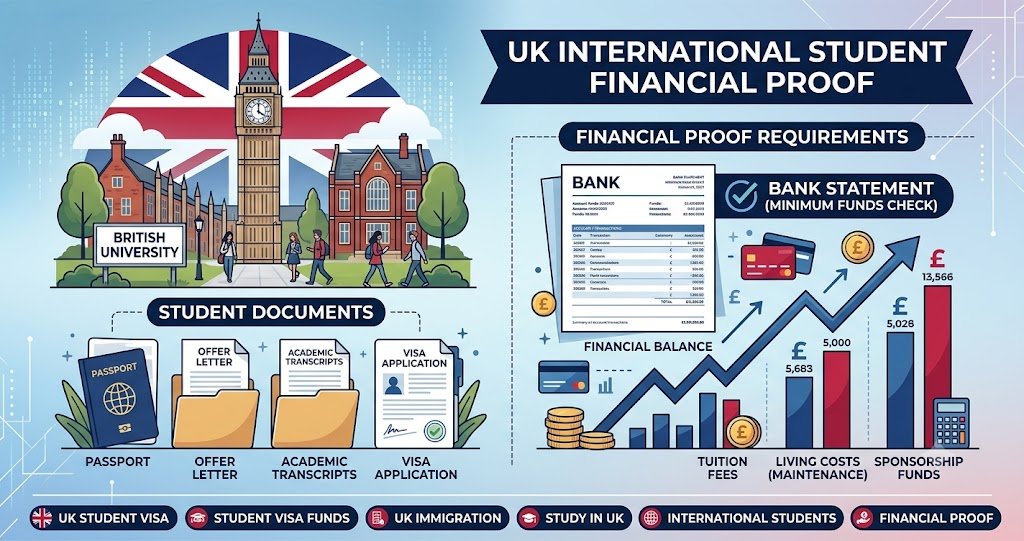
International students applying for a UK Student visa must demonstrate that they have enough money to pay their required course fees and support themselves while studying in the country. The financial requirement is one of the key parts of the Student visa application process, although some applicants are exempt from proving funds.
For applications under the current rules, students generally need to show living-cost funds of £1,529 per month for study in London or £1,171 per month outside London, for a maximum of nine months. In addition, applicants normally need enough money to cover the outstanding tuition fees shown on their Confirmation of Acceptance for Studies, or CAS.
The requirement is important not only for students but also for universities, education businesses and the wider UK international education sector.
How Much Money Does an International Student Need?
The amount required depends on where the student will study.
For a standard Student visa application, the current maintenance requirement is:
- London: £1,529 per month for up to nine months
- Outside London: £1,171 per month for up to nine months
This means the maximum maintenance amount is £13,761 for London and £10,539 outside London, before considering outstanding tuition fees.
The student must also normally show enough money to cover one academic year’s course fees, up to the amount stated on the CAS.
The financial calculation therefore depends on both tuition costs and the student’s location.
Also Read: Chris Rokos Leaves UK for Greece as Tax Concerns Put Wealth Migration Back in Focus
Why the Financial Requirement Matters
The UK government’s financial requirement is designed to demonstrate that international students have access to sufficient funds to support themselves during their studies.
For applicants, this means the visa application is not simply about receiving an offer from a university or college.
A student may have an admission offer and a CAS but still need to satisfy the separate financial requirements applicable to their visa application.
The government states that applicants generally need to hold the required funds for 28 consecutive days, with the end of that period falling within 31 days of the visa application date.
This timing requirement makes financial planning particularly important.
What Counts as Financial Proof?
Applicants need to provide acceptable evidence showing that the required money is available.
The rules cover money for outstanding course fees and living expenses. Where students rely on a student loan or financial sponsorship, evidence from the relevant loan provider or sponsor can be used where it meets the immigration requirements.
The student’s CAS is also important because it records information about tuition fees and payments made to the education provider.
UK caseworker guidance says that where course fees have been paid, this must be confirmed on the CAS or supported by a receipt issued by the sponsor.
The 28-Day Bank Balance Rule
One of the most important parts of the UK international student financial proof requirement is the 28-day rule.
Students relying on personal funds generally need to demonstrate that the required amount was held for a continuous 28-day period. The final day of that period must fall within the specified timeframe before the visa application.
This means depositing the required amount shortly before applying may not satisfy the requirement.
Students should therefore plan their finances well before submitting a visa application.
For families funding international education, this is also relevant because currency transfers and international banking transactions can take time.
London Versus Outside London
The UK uses different maintenance amounts depending on where the student will study.
The London figure is higher because the government applies a separate maintenance rate to students studying in London. The current requirement is £1,529 per month, compared with £1,171 per month outside London.
Over nine months, the difference is significant.
A student studying in London may therefore need to demonstrate up to £3,222 more in maintenance funds than a student studying outside London, before tuition costs are considered.
This difference can materially affect the financial planning required by international applicants.
Dependants Can Increase the Requirement
Students bringing eligible dependants may need to show additional maintenance funds.
The government guidance states that additional amounts apply for dependants, with the required monthly figure depending on whether the student studies in London or outside London.
That makes the total financial requirement considerably higher for families than for individual students.
Applicants should calculate the requirement based on their own visa circumstances rather than relying on a general figure found online.
Who May Not Need to Prove the Money?
Not every Student visa applicant has to provide the same financial evidence.
The government identifies exemptions, including certain applicants whose nationality is exempt from the requirement and people who have already been in the UK with valid permission for at least 12 months at the time of application. Other specific exemptions can also apply.
This is why students should check the current government rules applicable to their individual application.
A previous visa history, nationality or type of application can change what evidence is required.
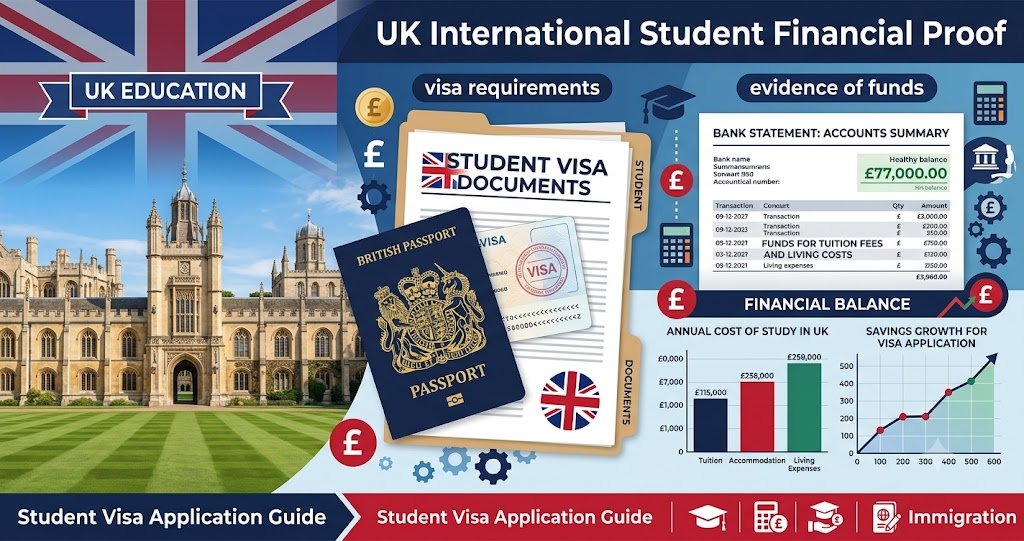
Financial Planning Is Becoming More Important
The maintenance requirement is subject to government review.
In September 2026, the government published an explanatory memorandum describing an annual uplift to the Student route maintenance requirement. The document says the maintenance level is being aligned with maintenance loans available to home students for the 2026/27 academic year.
For the international education sector, annual adjustments create an additional planning consideration.
Students need to budget not only for tuition but also accommodation, food, transportation, insurance and other living expenses. Meeting the visa minimum does not necessarily mean that the amount will comfortably cover a student’s actual lifestyle.
What This Means for Students and Education Businesses
For students, financial preparation should begin well before the visa application.
Universities and education agents also have an interest in ensuring prospective students understand the requirement. A student who underestimates the required funds may face avoidable problems during the visa process.
From a business perspective, the rules also influence how international students plan enrolment, deposits, accommodation and foreign-exchange transfers.
The difference between London and non-London requirements is particularly relevant for students comparing universities in different parts of the UK.
Also Read: Wakefield Trinity Financial Losses 2025: What the Accounts Reveal
Conclusion
The UK international student financial proof requirement is a critical part of Student visa preparation. Applicants generally need to demonstrate outstanding tuition fees plus sufficient maintenance funds, with different living-cost amounts applying inside and outside London.
The 28-day holding requirement means financial preparation cannot be left until the final stage of the visa process. Students should also check the latest government rules because maintenance requirements can be updated over time.
For international students and their families, understanding the rules early can make budgeting, university selection and visa preparation significantly easier.
FAQs
How much money must an international student show for the UK?
The current maintenance requirement is £1,529 per month for study in London and £1,171 per month outside London, for up to nine months, plus applicable outstanding tuition fees.
How long must the money be held?
Generally, the required funds must be held for 28 consecutive days, with the end of that period within the required timeframe before the visa application.
Do students need to show tuition fees?
Students generally need enough money to pay the outstanding course fees for one academic year, as stated on their CAS.
Is the financial requirement different in London?
Yes. The current maintenance requirement is higher for students studying in London than for students studying elsewhere in the UK.
Can a student use a student loan as financial evidence?
A student loan can be used where the loan and supporting evidence meet the applicable UK immigration requirements.